 If I had a penny for every woman over 40 who has told me they’re suddenly putting weight on, even though they’re doing nothing different, I’d definitely have a few quid. Menopause brings with it myriad negatives that women have to contend with, hot flushes, brain fog; and, for many of us, an increase on the scales! Journalist and regular Mounjaro user, Louise Atkinson, agrees.
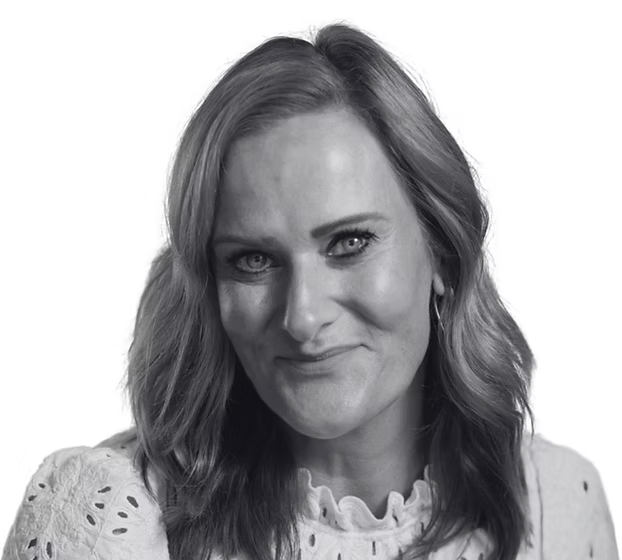
“Like lots of women, my weight crept up through my 40s and 50s”
“I was particularly worried about the metabolic impact of menopausal abdominal fat, which by the time I reached 60 seemed particularly impervious to all my attempts to diet and exercise it off. No matter how little I ate or how much I sweated in the gym I couldn’t shift the apple shape which I knew to be so bad for my health. I started on Mounjaro, for health reasons – not because I was hoping to drop a few dress sizes – and it has ticked all the health boxes and more.”
No matter what you do – it won’t budge
Like Louise, many women arrive at this stage of life having done everything right. They’ve eaten well, stayed active, managed families and careers, and navigated stress for decades (ALL AT THE SAME TIME). Then suddenly, their body stops responding the way it used to and it feels unfair, confusing, or completely out of their control. And that’s often when Mounjaro enters the conversation.
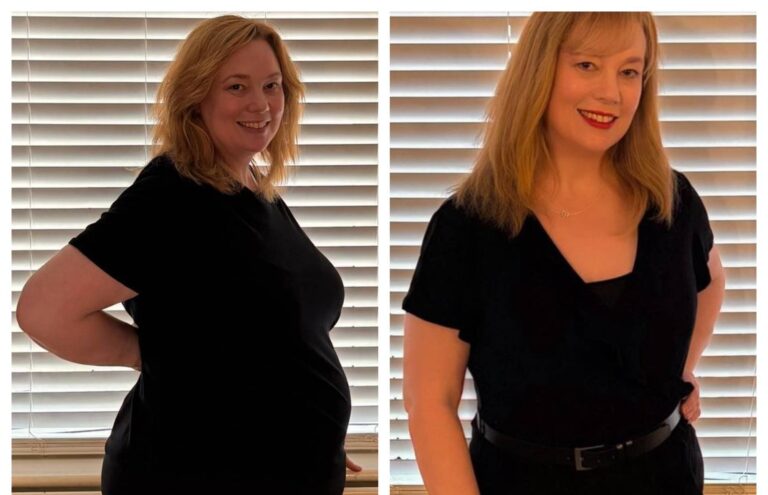
“I had been gaining weight for a couple of years due to the peri menopause and I had started feeling really out of control – no matter what I did, I couldn’t maintain my usual weight.” says Rachel Middlewick, nearing 50, the MD of a marketing company in London.
“I noticed the weight was getting harder to shift and this created negative food noise and self talk. I saw the results people found from the jab, and after a weekend away with my friends where I felt really body conscious, I decided to take the plunge.”
It was only the last stone that Rachel needed to shift, but shift it she did. “I was really surprised at how instant it was, and how easy it was too. It just took the food noise away, and ultimately, that stubborn menopausal gain, a lot of us seem to get.”
Why menopause changes everything (and it’s not your fault)
 Dr Thuva Amuthan, founder of Dr.Derme Skin Clinics
“Many women in perimenopause and menopause come to me feeling frustrated and exhausted. They often say they’re “doing everything right” – eating less, exercising more – yet still gaining weight, particularly around the abdomen. This isn’t a failure of willpower; hormonal changes play a real role.”
He goes on to explain about hormones playing a big part in the menopause story. “Falling oestrogen levels change how the body stores fat, reduce insulin sensitivity and lower metabolic rate, making weight loss genuinely harder. Poor sleep and increased stress also raise cortisol, which encourages fat storage.”
Dr Authan’s tips before considering weight-loss drugs (WLDs) – I always encourage women to focus on what changes with menopause:
- Prioritise protein to preserve muscle mass and metabolism
- Add strength training, not just cardio
- Manage sleep and stress, as these strongly affect weight at this stage
- Avoid severe calorie restriction, which can backfire hormonally
Where WLDs fit in
“Weight-loss drugs can absolutely be helpful for some women,” says Amuthan. “Particularly where menopause related weight gain is affecting health, confidence or metabolic risk. They’re not a quick fix, and they work best alongside lifestyle changes and medical supervision. The decision should be individual, weighing benefits, side effects and long-term sustainability.”
Key reassurance
“The most important thing women need to hear is that menopause weight gain is biological, not personal failure,” reiterates Amuthan. “And ultimately, there are now more evidence-based options than ever to support them.”
Why does Mounjaro work?
Women who choose Mounjaro (or Wegovy) commonly notice:
- Hunger feels calmer, not urgent
- Food noise quietens
- Portions feel natural again
- Cravings reduce without white-knuckling
- Decisions feel less emotional
For menopausal women, this can feel profound – especially after years of battling a body that won’t cooperate. It’s not about eating less because you’re forcing yourself to. It’s about eating less because your body (or mind) finally lets you.
Menopause symptoms women often ask about
Will it make hot flushes worse?
Most women don’t report worsening menopausal symptoms. Some even say better sleep and steadier blood sugar improves how they feel overall.
What about fatigue?
Early tiredness can happen, especially while adjusting doses. Many women find this settles – particularly as appetite regulation improves and energy rebounds with weight loss.
Will it affect hormones?
Mounjaro doesn’t replace or suppress oestrogen. It works on appetite and insulin pathways, not reproductive hormones.
If you’re on HRT, this is something to discuss with your prescriber so treatment works with your body, not against it.
The emotional side matters too
Weight gain during menopause can hit confidence hard.
Women often talk about:
- Feeling invisible
- Losing trust in their body
- Avoiding photos or social events
- Carrying quiet shame
One of the most powerful shifts many describe on Mounjaro isn’t just physical – it’s emotional. Feeling in control again. Feeling like the old you, without the constant mental load.
Things women say they wish they’d known earlier
- Menopause weight gain is biological, not personal failure
- You don’t have to “earn” help by suffering first

- Appetite hormones matter more than willpower
- Supporting your body is not giving up
Menopause isn’t a closing chapter
For many women, Mounjaro becomes part of opening a new chapter. Calmer, more confident, and more in tune with how their body works now. There’s no single “right” choice. Only informed ones – made without shame.
If you want to tell all your friends, then do. If you want to keep it to yourself, that’s fine too.
Rachel Middlewick said she kept it all to herself at the beginning:
“I didn’t talk about it to anyone to start off with. I kept it completely to myself for a month, then I told my partner. Over time I told a handful of friends. That meant I told people the positive impact it had on me, rather than asking for them to understand, before I did myself.”
It’s your life, and your decision, with your doctor or healthcare provider. Whatever you decide, SlimrChat is here to walk it with you.