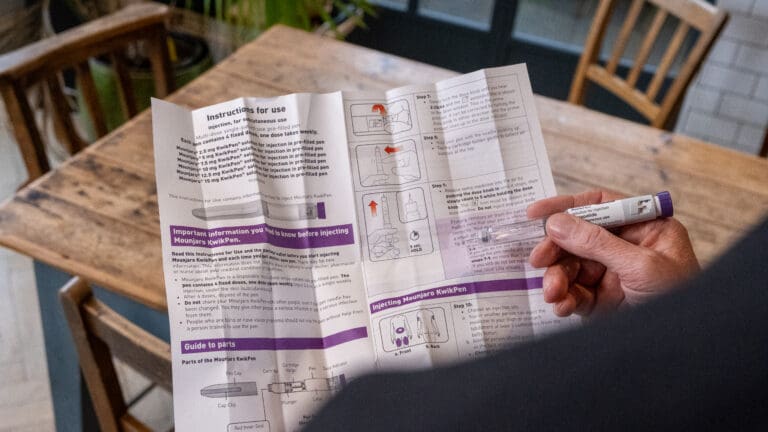

Why doses increase gradually
GLP-1 weight loss drugs are introduced slowly through a dose escalation schedule, often called titration – basically you take an increasing dose over time.
The reason is simple: these medications have strong effects on digestion and appetite.
Increasing doses gradually allows the body to adapt.
Typical schedules increase every four weeks until a maintenance dose is reached. Some SlimrChat members have noticed nausea after breaking their treatment and then restarting – again, this is experienced because the body is adapting.
What happens inside your body when the dose increases
Each dose increase strengthens several physiological effects.
Slower stomach emptying
- GLP-1 drugs slow gastric emptying, meaning food remains in the stomach longer.
- When the dose increases, this effect can temporarily intensify.
- Food staying in the stomach longer can create sensations of fullness, bloating or nausea.
Stronger appetite signals
- Higher doses amplify the appetite-reducing signals sent to the brain.
- This can make meals feel larger or heavier than before.
Changes in gut-brain signalling
- GLP-1 hormones communicate directly with the brain areas that regulate appetite and nausea.
- During dose increases these signals can temporarily become stronger until the body adjusts.
Why nausea often improves after a week or two
For most people, nausea during dose escalation is temporary.
The digestive system gradually adapts to:
- slower stomach emptying
- reduced appetite
- smaller food volumes
Once the body adjusts, symptoms usually settle.
Strategies that may help during dose increases
Several habits can reduce nausea while your body adapts.
Eat smaller meals
- Large meals are more likely to trigger nausea when digestion slows.
Avoid very fatty foods
- High-fat meals can stay in the stomach longer and worsen symptoms.
Eat slowly
- Eating slowly helps digestion begin properly and prevents overeating.
Stay hydrated
- Small sips of water throughout the day can help prevent nausea.
For more tips on how to manage nausea, read our article: Tips to beat nausea
Final word from SlimrChat
Nausea during dose increases can feel frustrating, but it is often a temporary part of the body adjusting to treatment.
Understanding why it happens and preparing for it can make the titration phase easier to manage.