
We’ve all wondered about the seemingly arbitrary 10,000 steps, which isn’t an insubstantial amount of walking! Well, I’m here to deliver good news. You don’t need to become a marathon walker to improve your health or support your weight loss journey.
The 10,000-step rule
This surprises a lot of people. The 10,000-step target did not start as a medical recommendation. It actually came from a Japanese marketing campaign in the 1960s. Around the time of the Tokyo Olympics, a company launched a pedometer called the “manpo-kei”, which roughly translates to “10,000 steps meter”. The number was catchy, memorable and easy to market to people. And somehow, decades later, it became one of the most recognised fitness goals in the world. And pretty much still is.
That doesn’t mean it is pointless though. Even if the number itself was not based on hard science walking regularly still has huge health benefits.
Walking is important for your weight loss journey (and your life)
For many of us walking becomes the first type of exercise that genuinely feels manageable, and easier to fit into normal life, when we start to lose weight. We hear this all the time from our SlimrChat friends.
As weight starts to come down, movement often becomes easier, confidence improves and energy levels begin to change too.
Walking can help:
- improve heart health
- support fat loss
- boost mood and mental wellbeing
- improve stamina and fitness
- reduce stress and anxiety
- help preserve muscle alongside weight loss
- build healthier routines that last beyond medication
And importantly, walking has a low impact on your body. The reason this matters is because many people starting GLP-1 treatment are carrying extra weight, dealing with joint pain, or simply feeling out of shape after years of struggling with their weight.
It’s heartening for us all to know that you really do not need punishing workouts to make progress.
Does walking help weight loss?
Yes, it absolutely does. It’s common sense, really. Weight loss treatments help reduce appetite and make it easier to eat fewer calories. Walking helps increase the amount of energy your body uses, and together, they work really well.
Walking also helps us avoid the “I’ll just rely on the jab” trap. It shifts the focus towards building long-term habits rather than chasing quick fixes. This is the key to maintaining the achievements we make on our journeys.
On average, 10,000 steps may burn around 400–500 calories, although that varies depending on:
- your weight
- your walking speed
- hills and terrain
- fitness level
- metabolism
BUT, you don’t need to hit 10,000 steps every day to see benefits.
In fact, many studies now suggest health improvements begin well below that number. We reported last week that 7,000 to 8,500 steps is great for maintaining weight loss according to a new study.
How far is 10,000 steps?
For most people, 10,000 steps works out at roughly:
- five miles
- or around eight kilometres
It usually takes around 1 hour 30 minutes to 1 hour 45 minutes in total, depending on your pace.
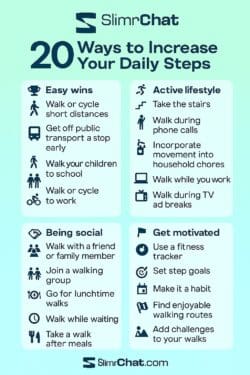
But remember, those steps do not need to happen all at once.
They all count:
- walking the dog
- shopping
- pacing during phone calls
- short evening walks
- taking the stairs
- parking further away
- getting off the bus earlier
It all adds up.
I cannot manage 10,000 steps
Then do less. It’s absolutely fine.
One of the biggest mistakes people make on a weight loss journey is thinking everything has to be perfect.
If you currently walk 2,000 steps a day, aiming for 4,000 is progress. If you already do 7,000 naturally, that may already be enough for your lifestyle and goals.
The best movement plan is the one you can actually stick to. And, from my experience, once you’ve solved that you’re off!
Walking is not the only option either. Cycling, swimming, gardening, resistance training and even active housework all count towards improving your health.
SlimrChat sign off
Our advice is to commit to doing more movement from the start of your weight loss journey. At the very least you can take time to enjoy the space for yourself, with the confidence of knowing that it’s making you healthier and happier.